The One Thing
Open full-size illustration →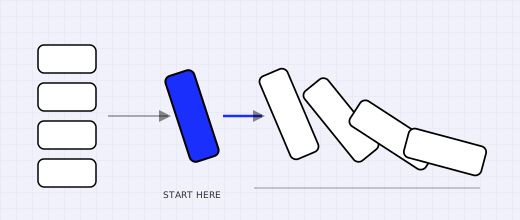
The One Thing is Gary Keller’s framework for cutting through a long to-do list. One focusing question points to the action that makes the most other work easier or unnecessary.
The idea
The book’s central tool is the focusing question. “What’s the ONE Thing I can do such that by doing it everything else will be easier or unnecessary?” The framework argues that a small number of actions, sometimes just one, make many later tasks easier or unnecessary. Finding and doing that action first beats spreading effort evenly across a long list.
When to use it
- A to-do list has grown long enough that everything feels urgent and equally important.
- Starting a new project, week, or day and deciding where to put first effort.
- Feeling busy without feeling like the important work is actually moving.
How to apply it
- Ask the focusing question for the relevant time frame (today, this week, this year, this life).
- Identify the one action that would make the most other items easier or unnecessary.
- Do that action before anything else competes for the same time.
- Repeat the question at the next time frame down, so the daily “one thing” ladders up to longer-term goals.
Watch out for
- Treating “the one thing” as license to ignore genuinely time-sensitive small tasks that still need doing.
- Picking an easy or comfortable task and rationalizing it as “the one thing” when a harder action would make more of the other work easier or unnecessary.
Related models
- First Things First. A related way to separate the important from the merely urgent.
- Prioritization 80/20 Pareto. The same underlying idea that a small share of effort drives most of the result.
- Goal Setting. Choosing the right goal that “the one thing” should be in service of.
Sources
Gary Keller with Jay Papasan, The One Thing: The Surprisingly Simple Truth Behind Extraordinary Results (2013).