Scrum
Open full-size illustration →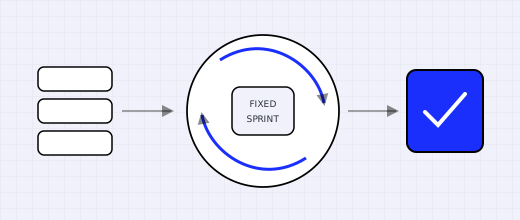
Scrum is a lightweight framework for running agile product development in fixed-length iterations called sprints, with a small set of defined roles, events, and artifacts.
The idea
Work is pulled from a prioritized backlog into short, fixed-length sprints (commonly one to four weeks). A small set of roles keeps the process light. The Product Owner owns the backlog and priorities. The Scrum Master facilitates the process and removes blockers. The Development Team builds the increment. Recurring events give the team a regular rhythm to plan, inspect, and adapt. Those events are sprint planning, a daily stand-up, a sprint review, and a retrospective.
When to use it
- Product development where requirements are expected to evolve
- Teams that benefit from a regular cadence of planning and review
- Work that can be broken into a prioritized backlog of shippable increments
How to apply it
- Build and prioritize a product backlog.
- Plan a sprint by pulling a slice of backlog items the team commits to finishing.
- Hold a short daily stand-up to surface blockers.
- Review the completed increment with stakeholders at the end of the sprint.
- Run a retrospective to adjust the team’s own process before the next sprint.
Watch out for
- Running the ceremonies without the underlying discipline of inspect-and-adapt turns Scrum into empty ritual
- A Product Owner who isn’t actually available to clarify priorities stalls the whole process
- Sprints that run too long lose the fast-feedback benefit Scrum is built around
Related models
- Agile. The broader philosophy Scrum implements.
- Waterfall. The sequential approach Scrum and agile react against.
- Kaizen. The retrospective borrows this continuous-improvement idea.
Sources
Ken Schwaber and Jeff Sutherland, The Scrum Guide.