Problem Solving
Open full-size illustration →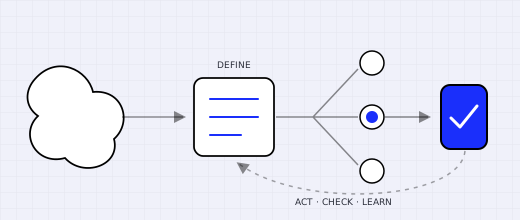
Problem solving is the general process of moving from “something is wrong or missing” to a working solution — defining the problem, understanding its causes, generating options, and acting on the best one.
The idea
Most problem-solving frameworks share a similar shape, however they’re branded: understand the problem before acting, look for the actual cause rather than the nearest symptom, generate more than one candidate solution, then pick, implement, and check whether it worked. Skipping straight from “problem noticed” to “solution implemented” is the most common failure mode — it tends to produce fixes that treat symptoms and problems that recur.
When to use it
- Any non-trivial problem where the first idea that comes to mind might not be the best one
- Recurring issues that keep resurfacing despite previous fixes
- Situations where multiple stakeholders need a shared, legible process
How to apply it
- Define the problem clearly and separate it from its symptoms.
- Analyze likely causes rather than guessing at the first one.
- Generate multiple candidate solutions before choosing.
- Implement the chosen solution and set a way to check whether it worked.
- Review the outcome and feed what was learned back into future problems.
Watch out for
- Jumping to a solution before the problem is properly defined.
- Treating symptoms instead of causes, so the problem keeps returning.
- Generating only one option and skipping comparison entirely.
Related models
- Problem Definition — the first step of this process.
- Problem Framing — how the problem is worded shapes which solutions seem available.
- Root Cause Analysis — a focused technique for the analysis step.
- Problem Logging — captures problems worth running through this process.