Opportunity
Open full-size illustration →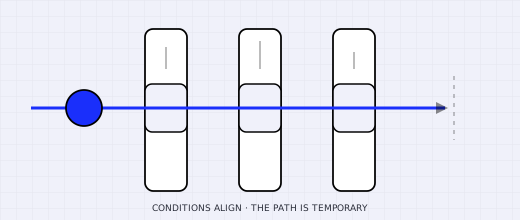
An opportunity is a favorable set of circumstances that makes a valued outcome newly possible, but on its own it produces nothing — it only pays off once someone notices it and acts.
The idea
Opportunities are usually temporary and partial: a gap in a market, a new technology, a relationship, a piece of information others have not yet used. They rarely arrive labeled as such, and they rarely stay open indefinitely — most close, get taken by someone else, or lose their value as conditions change. Treating “opportunity” as a mental model means separating two distinct skills: spotting a favorable situation early, and converting it into a result before it disappears.
When to use it
- Scanning a market, project, or relationship for an early, unproven advantage
- Deciding whether a chance in front of you is worth pursuing at all
- Reviewing past decisions to see whether an opportunity was missed, wasted, or acted on too late
Watch out for
- Not every possibility is a real opportunity; some look attractive but cost more than they return
- Waiting for certainty often means the opportunity is gone by the time you act
- Chasing every opportunity spreads effort too thin to capitalize on the ones that matter most
Related models
- Opportunity Cultivation — deliberately noticing and developing opportunities before they are ready to act on.
- Opportunity Capitalization — converting a recognized opportunity into a concrete result.
- First Things First — deciding which opportunities deserve attention before others.