Opportunity Capitalization
Open full-size illustration →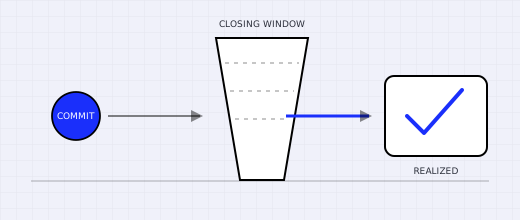
Opportunity capitalization is the act of converting a recognized opportunity into a concrete result. It is the step where noticing and preparation turn into decisive action.
The idea
Recognizing an opportunity and cultivating it are not enough on their own. Value is realized only when someone commits time, money, or attention to act on it while it is still available. Capitalization is time-bound. Most opportunities have a window. The same idea acted on early can succeed where the identical idea acted on late fails, because competitors, conditions, or interest have moved on. It requires converting an uncertain, general possibility into a specific, committed course of action.
When to use it
- An opportunity has been identified and reasonably well understood, and further delay only reduces its value
- Deciding how much time, money, or reputation to commit once a favorable situation is confirmed
- Reviewing why a well-recognized opportunity was still missed, to separate a spotting failure from an execution failure
How to apply it
- Set a clear trigger or deadline for moving from evaluation to action, rather than evaluating indefinitely.
- Commit resources proportional to the confidence and size of the opportunity, not the maximum available.
- Act while the window is open, and accept that some uncertainty will remain unresolved.
Watch out for
- Over-analysis can consume the window the opportunity was open in
- Committing too much too fast can turn a good opportunity into an overextended bet
- Confusing activity (meetings, plans) with actual capitalization (a shipped decision or investment)
Related models
- Opportunity. The underlying concept this page develops.
- Opportunity Cultivation. The preceding step of developing an opportunity before acting on it.