Network Building
Open full-size illustration →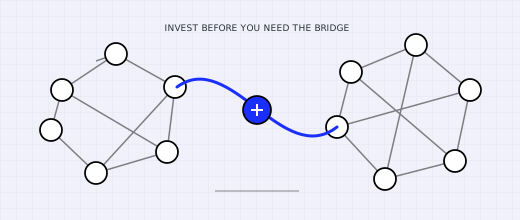
Network building is the deliberate practice of investing in relationships before you need them, so that information, opportunities, and trust are available when you do.
The idea
Professional and social capital compounds over time. Sociologist Mark Granovetter’s research on the “strength of weak ties” found that acquaintances — not close friends — are often the ones who bring genuinely new information and opportunities, because they connect you to circles your close ties already share. A network is therefore worth more for its structure — who it reaches that you otherwise wouldn’t — than for its raw size.
When to use it
- Entering a new industry or field where you have no existing contacts
- Job searching or looking for new opportunities
- Needing information or context outside your immediate team or expertise
How to apply it
- Map who already connects you to different groups, not just who you talk to most
- Reach out and give first; reciprocity builds trust over time
- Maintain periodic, light-touch contact instead of only reaching out when you need something
Watch out for
- Treating relationships as purely transactional erodes the trust that makes a network useful
- Over-investing in one tight, closed cluster leaves you exposed to an echo chamber
- Confusing a large contact list with genuine access or trust
Related models
- Compound Interest — the compounding, delayed-payoff logic behind this practice.
- Brokerage and Closure — the structural positions that make a network valuable.
- Small-World Phenomenon — why networks reach far with only a few links.
- Reciprocation — the norm that keeps network relationships mutual.
Sources
Mark Granovetter, “The Strength of Weak Ties” (American Journal of Sociology, 1973).