Hurdle Rate
Open full-size illustration →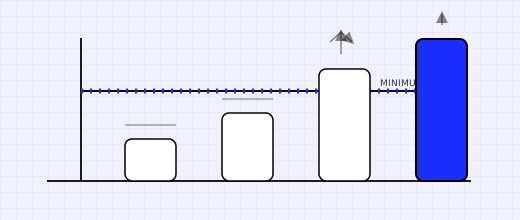
The hurdle rate is the minimum return an investment or project must earn before it’s considered worth doing at all.
The idea
Every option competes against what you could otherwise do with the same money, time, or effort. That alternative is its opportunity cost. The hurdle rate turns that comparison into a single number. A proposal must clear that threshold return before it even enters the conversation. Set the rate too low and marginal projects crowd out better uses of scarce resources. Set it too high and good opportunities get rejected. In finance, the hurdle rate is often built from a baseline cost of capital plus a risk premium, so riskier or less certain projects face a higher bar than safer ones. Framed this way, the hurdle rate makes opportunity cost explicit and enforceable. You apply the same number each time, so you do not re-litigate the comparison for every proposal.
When to use it
- Comparing multiple investment or project proposals competing for the same limited capital
- Deciding whether a new initiative is worth pursuing at all, before spending time on a detailed business case
- Setting a bar for which opportunities deserve your time, using the same test you would use for money
How to apply it
- Estimate your baseline cost of capital, or the return of your best readily available alternative
- Add a risk premium if the opportunity is less certain or less liquid than that alternative
- Reject or deprioritize anything that doesn’t clear the resulting threshold
- Revisit the rate periodically. Your opportunity cost changes as your options change
Watch out for
- A hurdle rate set once and never revisited can silently misallocate resources as conditions change
- Overestimating expected returns to game a fixed hurdle rate is a common failure mode
- A rate that’s too conservative can lead to rejecting genuinely good opportunities out of excess caution
Related models
- Opportunity. The hurdle rate is a way of pricing opportunity cost explicitly.
- Compound Interest. The baseline return a hurdle rate is often benchmarked against.
Sources
Standard concept in corporate finance and capital budgeting (net present value / discounted cash flow analysis).