Excessive Self-Regard
Open full-size illustration →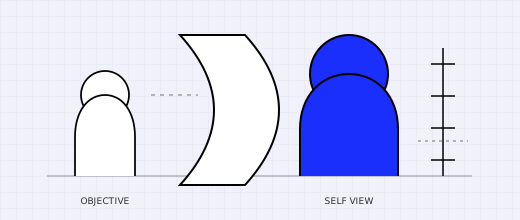
Excessive Self-Regard Tendency is Charlie Munger’s name for the common human bias of overvaluing one’s own abilities, judgments, possessions, and decisions.
The idea
People tend to rate their own abilities and choices above an objective average. Most drivers think they’re above-average drivers. Most people overrate their own contribution to a team’s success. The tendency also causes people to overvalue things merely because they own or chose them. They take extra credit for successes and attribute failures to bad luck.
When to use it
- Reviewing your own past decisions or forecasts for overconfidence before repeating a similar bet
- Interpreting why people resist selling underperforming investments or abandoning projects they started
- Understanding why unsolicited advice about someone’s own choices is often unwelcome
How to apply it
- Before committing to a judgment, ask what an outside, disinterested party would conclude.
- Seek disconfirming evidence for decisions you are personally attached to.
- Separate the value of an idea from the fact that it is yours.
Watch out for
- It compounds with confirmation bias. Once self-regard inflates a belief, evidence gets filtered to support it
- In hiring or promotion decisions it can favor people who resemble the decision-maker
- It is hardest to spot in yourself, precisely because it distorts self-assessment
Related models
- Envy and Jealousy Tendency. A related Munger tendency about comparison to others.
- Over-Optimism. Self-regard often feeds excessive optimism about one’s own plans.
Sources
Charlie Munger, “The Psychology of Human Misjudgment” (speech, Harvard Law School, 1995; reprinted in Poor Charlie’s Almanack).