00. Models
Models
A personal reference of mental models. Reusable thinking tools for decisions, prioritization, learning, and problem solving. Each page has the same shape. What the idea is, when to use it, how to apply it, and what to watch out for. Skim the list and open whatever fits the problem in front of you.
Thinking & Decision Making
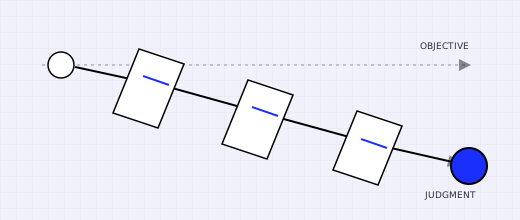
Cognitive Biases
growingSystematic, predictable patterns in human judgment that cause people to deviate from rational thinking.
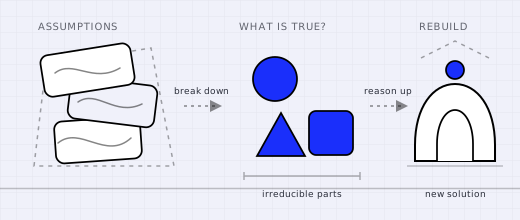
First Principles
matureReasoning from the most basic, verifiable truths of a problem rather than by analogy to convention.
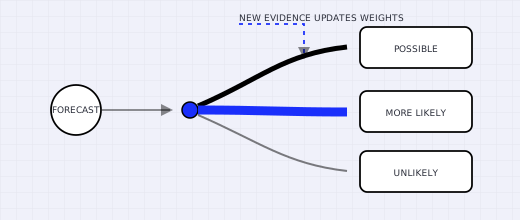
Probabilistic Thinking
matureReasoning in terms of likelihoods and ranges of outcomes instead of treating predictions as certain.
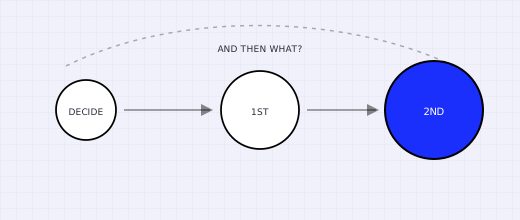
Second Order Effect
growingTracing the knock-on effects a decision causes beyond its immediate, obvious result.
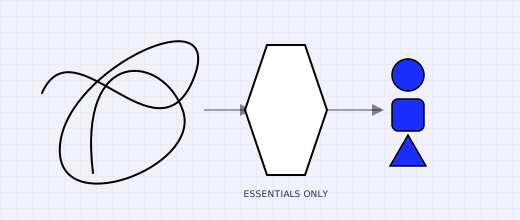
Simplifying
growingStripping a problem or system down to its essential parts so it becomes easier to understand and act on.
Productivity & Execution
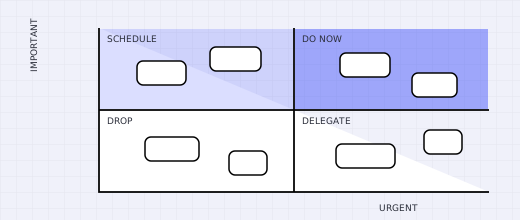
Eisenhower Matrix
growingA prioritization grid that sorts tasks by urgency and importance into four quadrants to decide what to do, when.
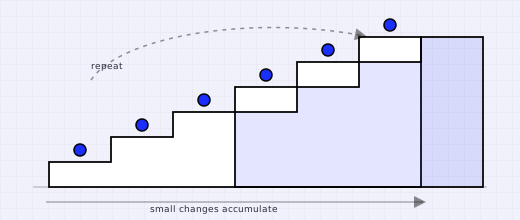
Kaizen
matureA philosophy of continuous, incremental improvement carried out by everyone, everywhere, every day.
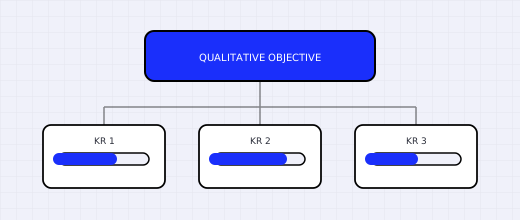
Objectives and Key Results (OKRs)
matureOKRs pair a qualitative objective with measurable key results to align and track quarterly strategy execution.
Learning & Growth
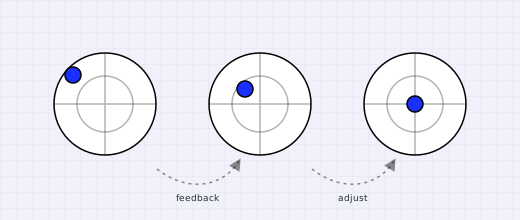
Deliberate Practice
matureStructured, effortful practice with immediate feedback, aimed at specific weaknesses instead of plain repetition.
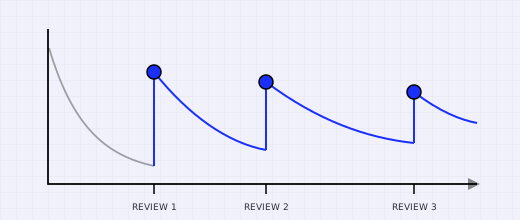
Forgetting Curve and Spaced Repetition
growingMemory fades on a predictable curve unless reinforced by reviews spaced increasingly far apart.
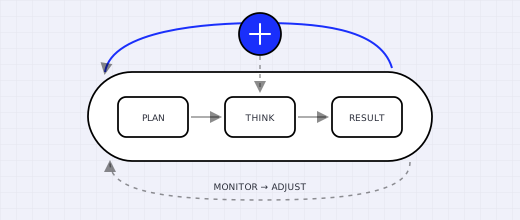
Metacognition
matureThinking about your own thinking to monitor, evaluate, and improve how you learn and make decisions.
Building & Strategy
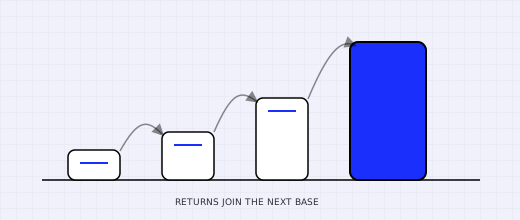
Compound Interest
matureHow returns earning returns of their own makes a quantity grow at an accelerating rate over time.
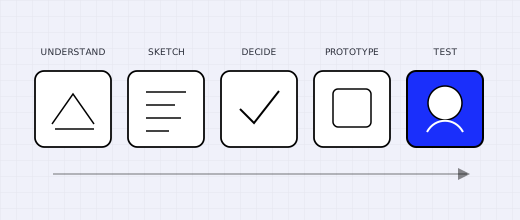
Design Sprint
growingA five-day process for answering critical product questions through prototyping and user testing.
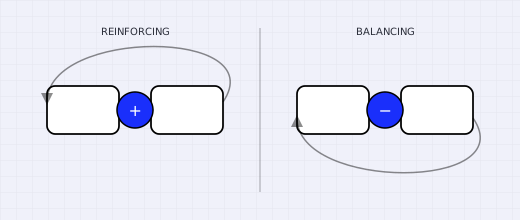
Feedback Loop
growingA system structure where output feeds back as input, either reinforcing a trend or balancing it back toward equilibrium.
Lean Startup
growingA framework, from Eric Ries, for building new products under uncertainty through rapid build-measure-learn loops.
Psychology & Influence
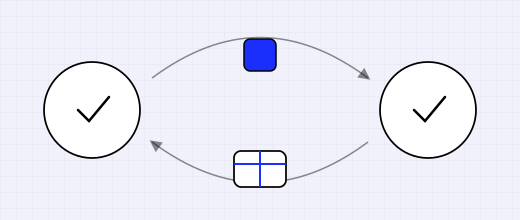
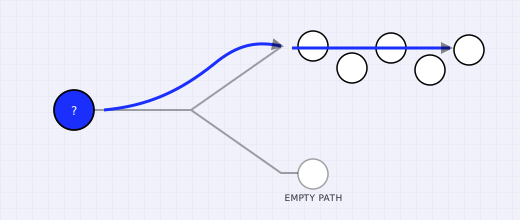
Problem Solving
All models
4DX
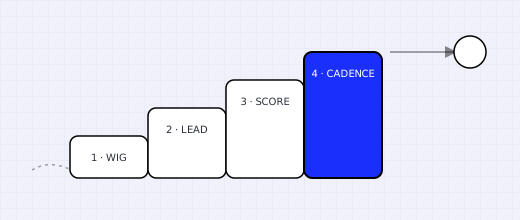
The 4 Disciplines of Execution, a framework for hitting a small number of key goals despite daily operational noise.
7 Levels of System Intervention
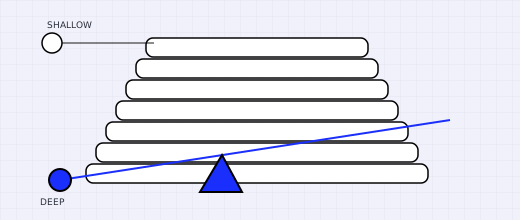
Ranking ways to intervene in a system from shallow, easy tweaks to deep changes in goals and mindset.
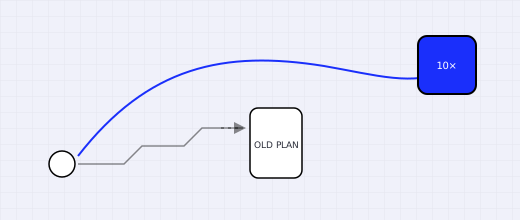
10x Goal Setting
Setting a goal ten times bigger than the obvious one, because a 10x target forces a different strategy than a 10% one.
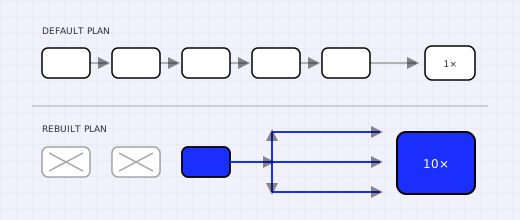
10x Project Management
Applying 10x thinking to a project by asking what would make the outcome ten times bigger or faster.
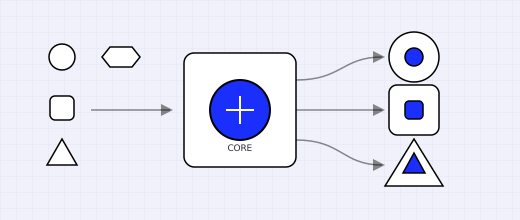
10x Understanding Yourself and Others
Knowing your own unique strengths well enough to focus there, and others well enough to hand off the rest.
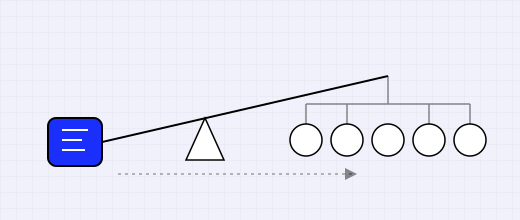
1000x Knowledge
Knowledge that compounds into disproportionate results when code, media, capital, or a network multiplies it.

Ad Hoc
Solving a specific problem right now, without building a reusable process around it.
Agile
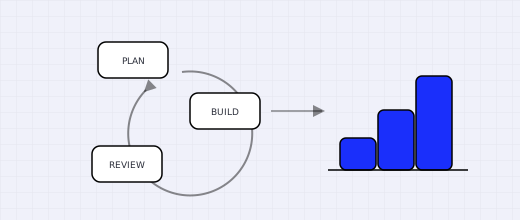
Delivering work in small increments and adapting the plan continuously based on feedback.
Authority Misinfluence
The tendency to defer to authority figures even when their claim is wrong or outside their expertise.
Availability Misweighing
Overweighting information that is vivid or easy to recall, and ignoring what is not top of mind.
Barbell Strategy - Nicholas Nassim Taleb
95% safe, 5% very risky
Beliefs
The models we hold about how the world works, which filter what we notice and how we act.
Big Hairy Audacious Goal (BHAG)
Shoot for the moon, land on the stars
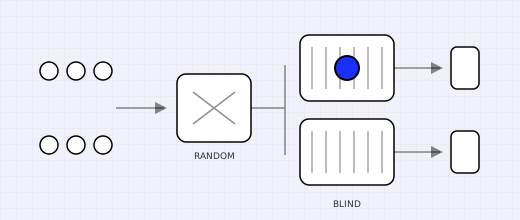
Blinded Randomized Design
Randomly assigning subjects to conditions and hiding who got what, so results reflect the treatment and not bias or expectation.
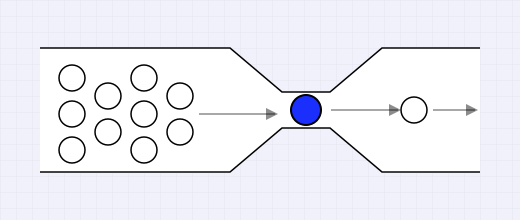
Bottleneck
The single slowest or most constrained step in a system that limits the throughput of the whole.
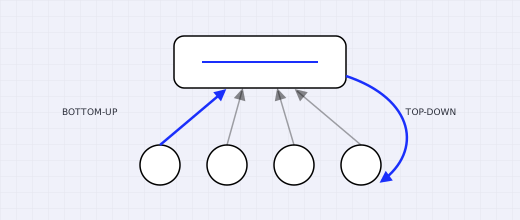
Bottom-Up vs Top-Down Causation
Whether a change is best explained by small parts driving the whole (bottom-up) or the whole shaping its parts (top-down).
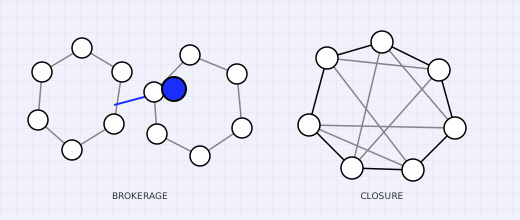
Brokerage and Closure
A trade-off in social networks between bridging disconnected groups (brokerage) and tightly knitting one group together (closure).
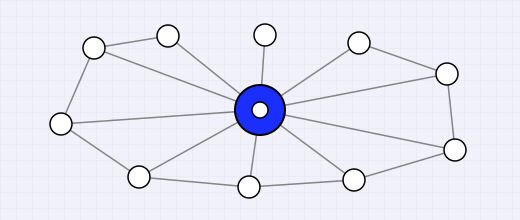
Centrality
How important or influential a node is within a network, based on its position and connections.
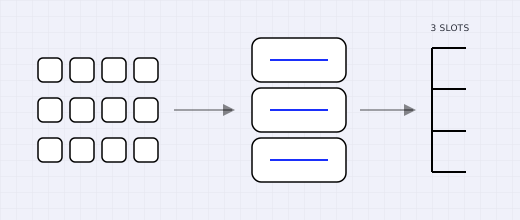
Chunking
Grouping individual pieces of information into larger, meaningful units so the mind can hold more at once.
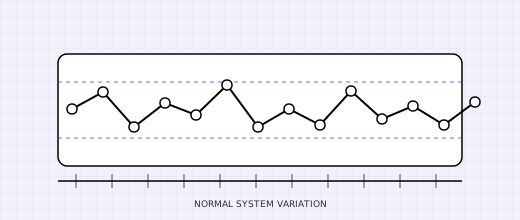
Common Cause
Variation in a process that comes from its normal, everyday operation rather than a single identifiable event.
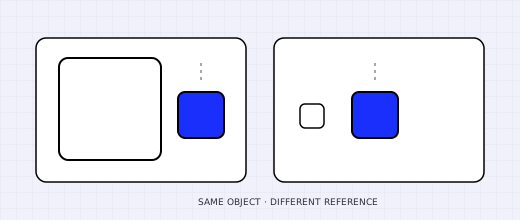
Contrast Misreaction
Judging something relative to a recent reference point rather than on its own absolute terms.
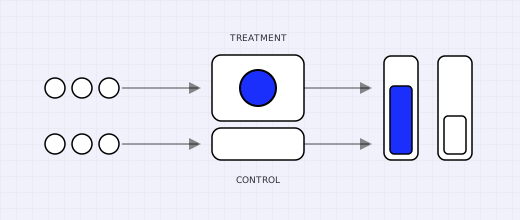
Controlled Experiment
A test that isolates one variable by comparing a treatment group against an otherwise identical control group.
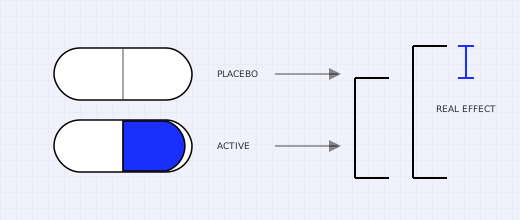
Controlled Placebo
Adding an inert placebo arm to an experiment to separate a treatment's real effect from the effect of merely being treated.
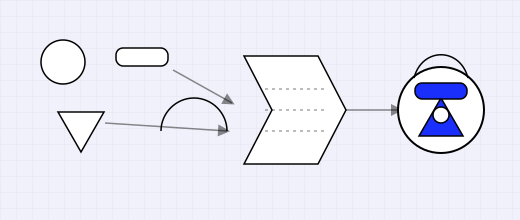
Creativity and Imagination
Combining and recombining existing ideas in new ways to imagine possibilities that do not yet exist.
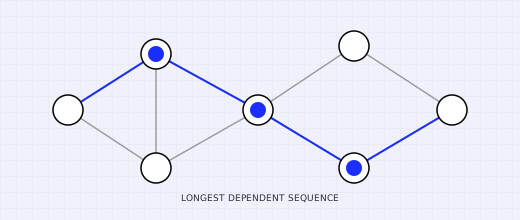
Critical Path Analysis
Mapping a project's tasks and dependencies to find the longest sequence that determines the earliest possible completion date.
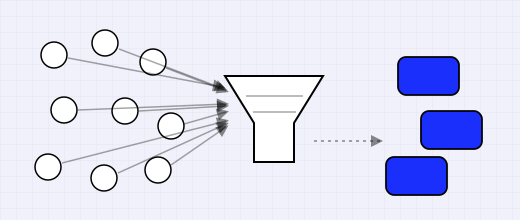
Crowdsourcing
Obtaining ideas, content, or solutions by opening a task to a large group of people rather than a single expert.
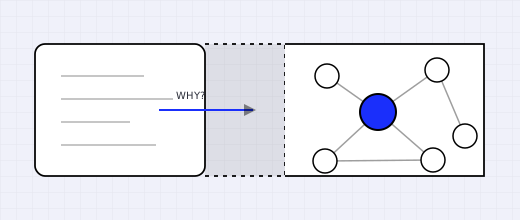
Curiosity
The drive to explore and understand the unknown, which fuels learning and the discovery of new ideas.
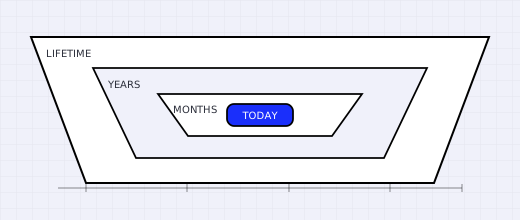
Decision Making on Short, Medium, and Long Term
Pair a different mental model with each time horizon, whether the decision covers a lifetime, years, months, or days.
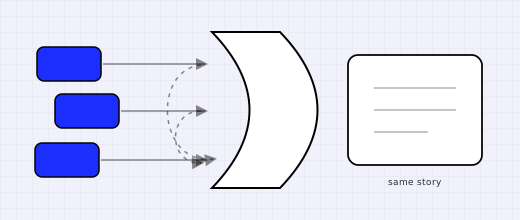
Denial
The mind unconsciously distorts or blocks out painful reality it cannot bear to accept.
Deprival Superreaction
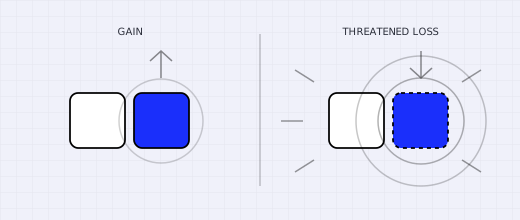
People react far more intensely to a loss, or a threatened loss, than to an equivalent gain.
Design for Lean Six Sigma
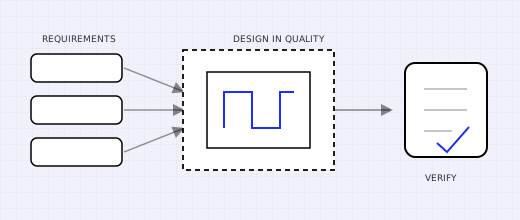
Design for Lean Six Sigma means designing a new process or product for quality and low waste from the start.
Disliking and Hating Tendency
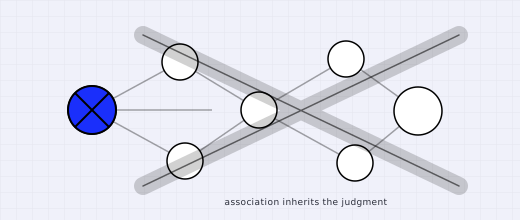
Disliking someone makes us overlook their virtues and unfairly judge whatever gets associated with them.
DMAIC
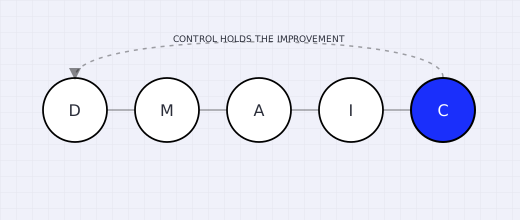
DMAIC is the Six Sigma cycle of Define, Measure, Analyze, Improve, and Control for improving an existing process.
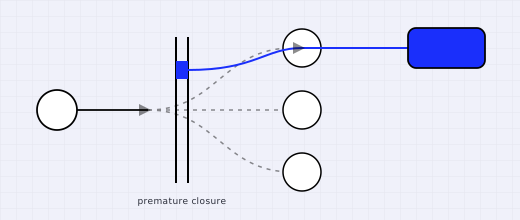
Doubt Avoidance
Uncertainty is uncomfortable, so the mind rushes to resolve doubt by reaching a decision quickly.
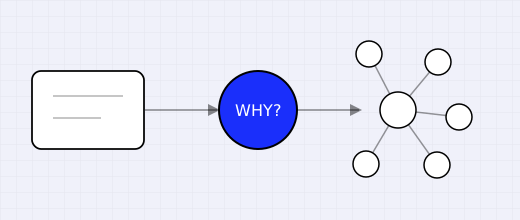
Elaborative Interrogation
A learning technique of asking yourself "why is this true?" for facts, which builds deeper, longer-lasting understanding.
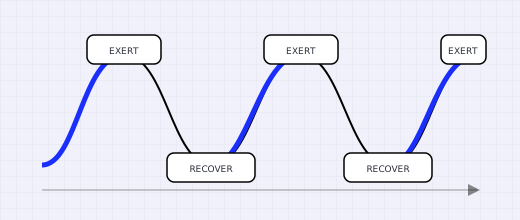
Energy Management
Physical, emotional, mental, and spiritual energy are finite and renewable, so manage energy along with time.
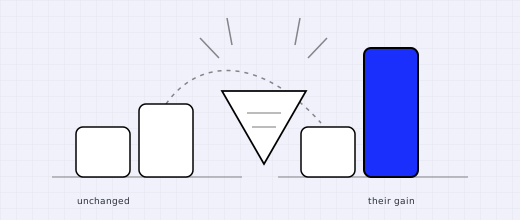
Envy and Jealousy Tendency
The drive to resent others' success, which distorts judgment even when that success costs you nothing.
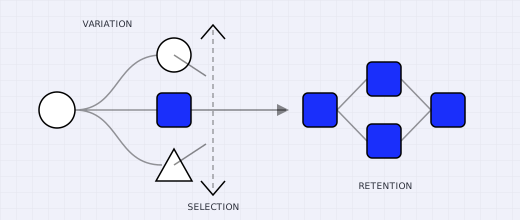
Evolution
Evolution by natural selection, where variation, selection, and retention compound over time and produce complex change without central design.
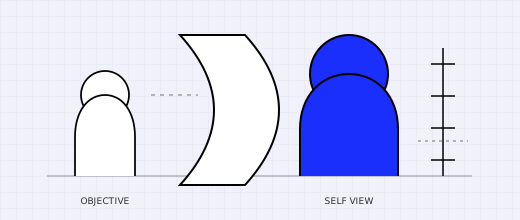
Excessive Self-Regard
The common bias of overvaluing your own abilities, judgments, and possessions.
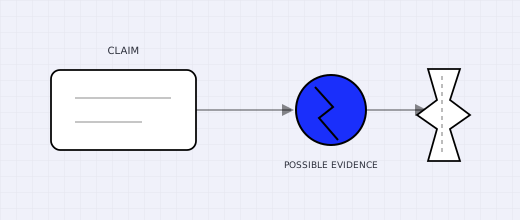
Falsifiability
A claim counts as scientific only if some possible observation could prove it wrong.
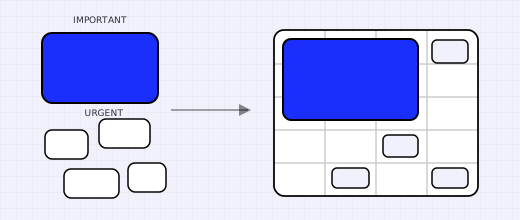
First Things First
Organizing time and effort around what is genuinely important rather than what feels urgent.
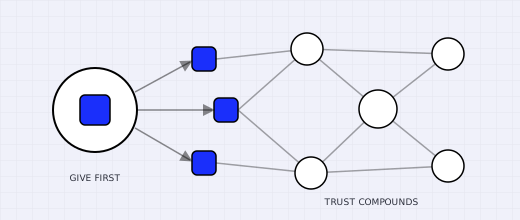
Giving
Contributing value to others without demanding an immediate return, so trust and goodwill compound over time.
Goal Setting
Choosing the right goal before optimizing strategy, since a good strategy toward the wrong goal is still wasted effort.
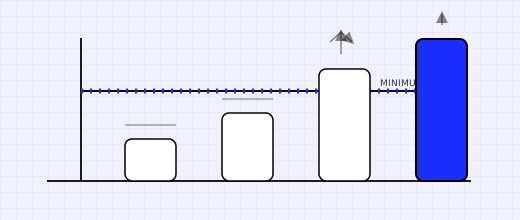
Hurdle Rate
The minimum acceptable return a project or investment must clear before it is worth pursuing.
ICE Framework
Scoring options on Impact, Confidence, and Ease, and where that sits in a wider decision hierarchy from daily tasks to lifetime choices.
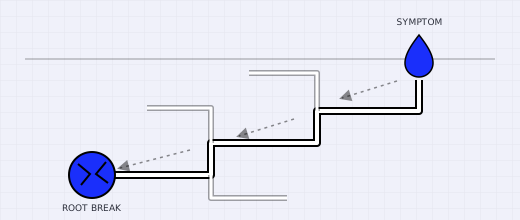
Identify Root Causes
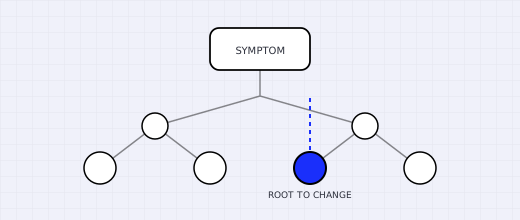
Tracing a problem back to its underlying cause instead of treating the symptom closest to the surface.
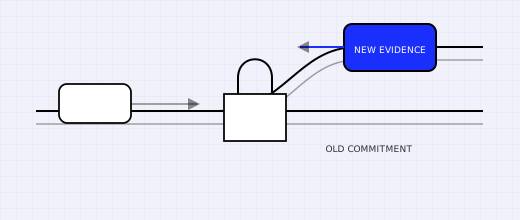
Inconsistency Avoidance
The tendency to keep prior conclusions, habits, and commitments even after new evidence undercuts them.
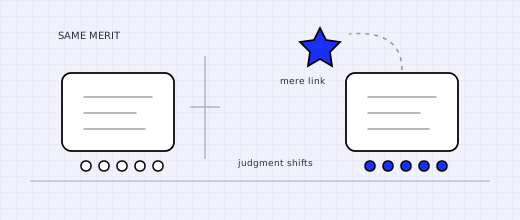
Influence From Mere Association
Judging a person, product, or idea by what it is merely linked to, rather than by its own merits.
Kantian Fairness
People expect fairness to be reciprocated exactly as they define it, and they react badly when it is not.
Learning How to Learn
Metacognitive strategies, like retrieval practice, spaced repetition, and chunking, that make learning any skill more effective.
Liking Loving
A Munger bias in which liking or loving someone makes us overlook their faults and adopt their views.
Lollapalooza
Charlie Munger's term for extreme outcomes that appear when several psychological tendencies combine and reinforce each other.
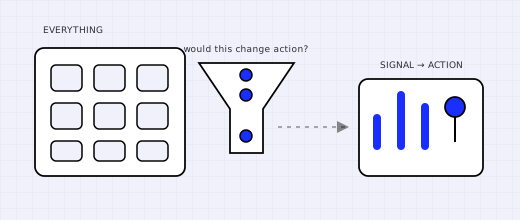
Master Your Metrics
Track the few metrics that truly reflect progress and treat them as signals to act on, not vanity numbers.
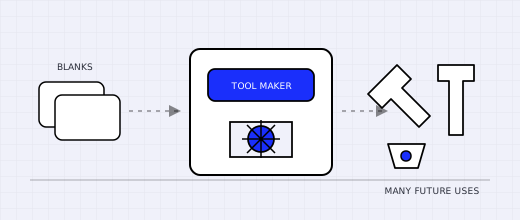
Meta Tool Usage and Creation
Building tools that make it easier to build other tools compounds your capability faster than using tools directly.
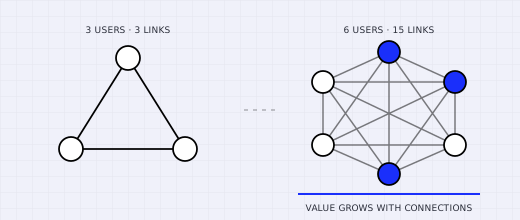
Metcalfes Law
A network's value grows roughly with the square of its number of connected users, not linearly with each one added.
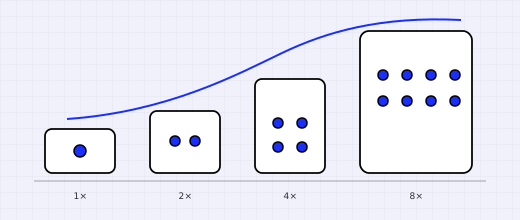
Moores Law
Gordon Moore's observation that the number of transistors on a chip roughly doubles every two years, driving exponential compute growth.
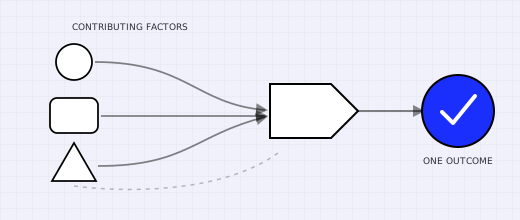
Multiple Causation
Most significant outcomes result from several factors acting together, not a single isolated cause.
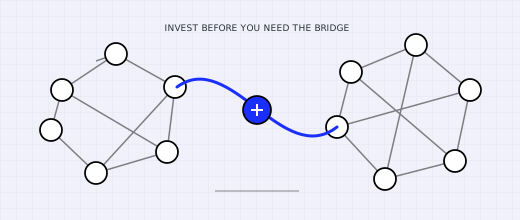
Network Building
Deliberately investing in relationships before you need them, so information, opportunities, and trust are there when you do.
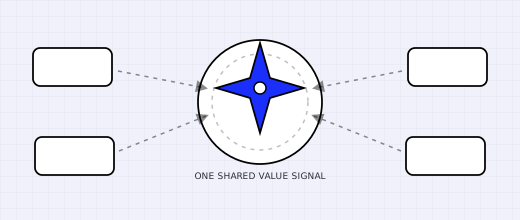
North Star
A single metric or statement chosen to represent the core value a product or team delivers, used to align decisions.
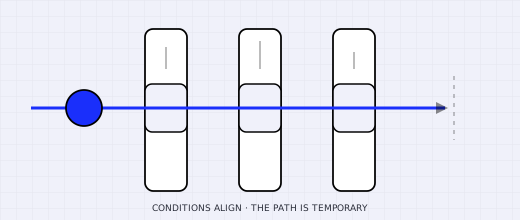
Opportunity
A favorable set of circumstances that only creates value once it is noticed and acted on.
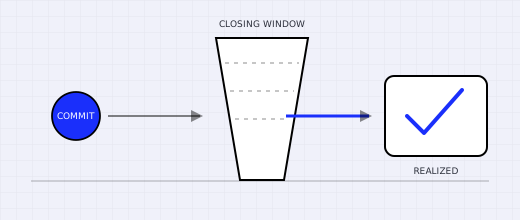
Opportunity Capitalization
Converting a recognized opportunity into a concrete result through timely, decisive action before it closes.
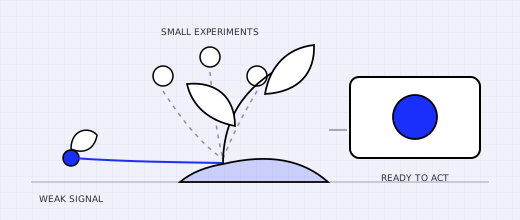
Opportunity Cultivation
Deliberately noticing, nurturing, and developing a potential opportunity before it is mature enough to act on.
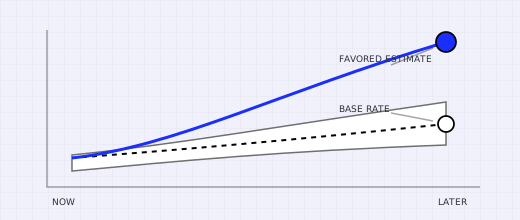
Over Optimism
Charlie Munger's term for the mind's default bias toward overly favorable estimates of outcomes and one's own prospects.
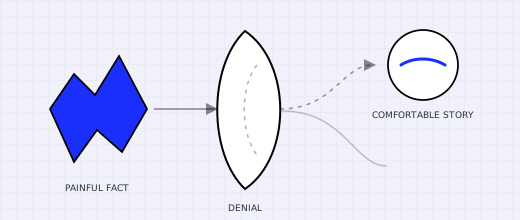
Pain Avoiding
A Munger tendency in which the mind unconsciously distorts painful reality to reduce psychological pain, often through denial.
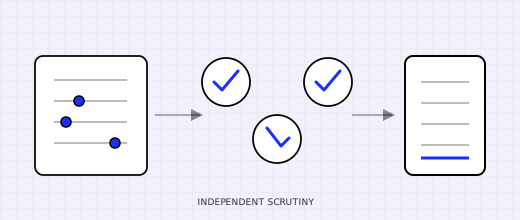
Peer Review
Having independent, qualified peers scrutinize a claim or piece of work before it is accepted or published.
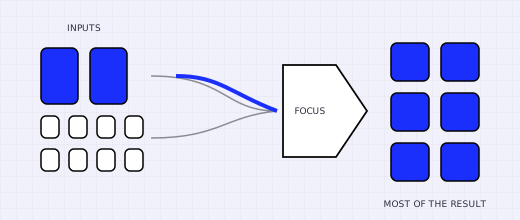
Prioritization 80/20 Pareto
Roughly 80% of outcomes come from 20% of causes, so focus effort on the vital few inputs.
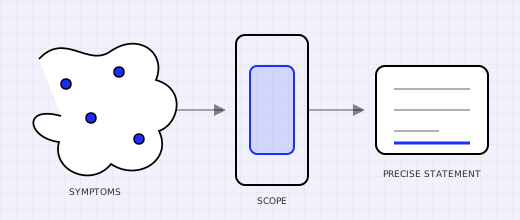
Problem Definition
Precisely stating what problem you are actually solving before jumping to solutions.
Problem Framing
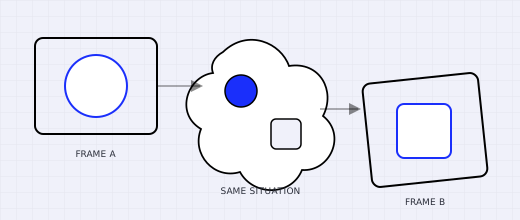
The way a problem is worded quietly limits which solutions people consider.
Problem Logging
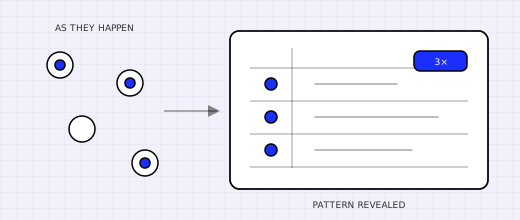
Writing down problems as they occur, instead of relying on memory, to spot patterns and set priorities.
Problem Solving
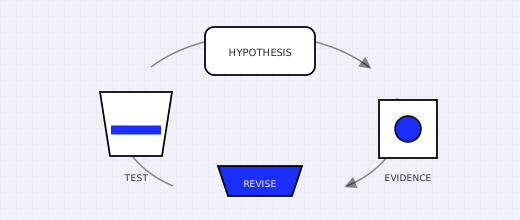
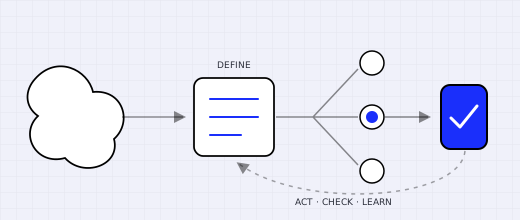
A general process for moving from a problem to a working solution. Define, analyze, generate, act, then review.
Procrastination
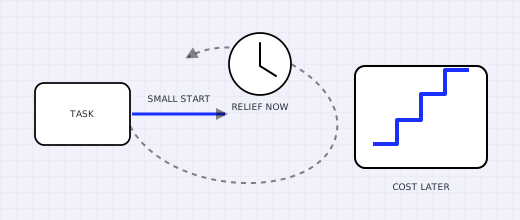
Voluntarily delaying a task despite expecting the delay to leave you worse off.
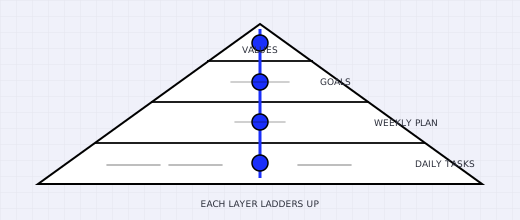
Productivity Pyramid
Stacking daily tasks on weekly plans, on goals, on values, so day-to-day work ladders up to what actually matters.
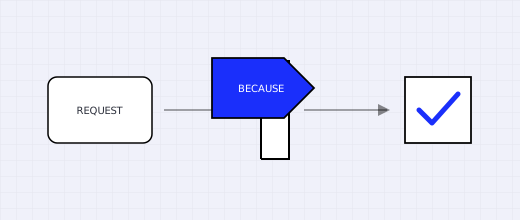
Reason Respecting
A Munger tendency. People comply more readily with a request when given a reason for it, even a weak one.
Regret Minimization
Aiming for long-term satisfaction
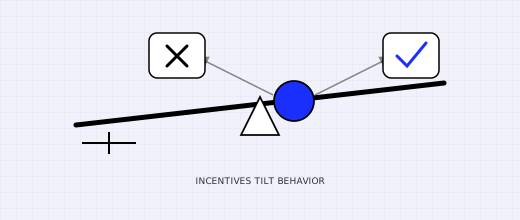
Reward Punishment
Charlie Munger's observation that incentives shape behavior more powerfully than people expect.
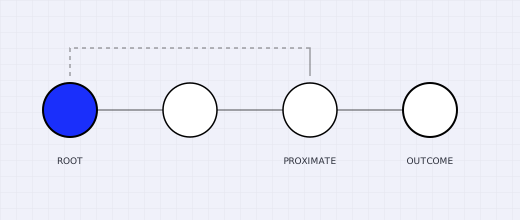
Root Cause vs Proximate Cause
The proximate cause is the last event before an outcome; the root cause is the earlier one worth fixing.
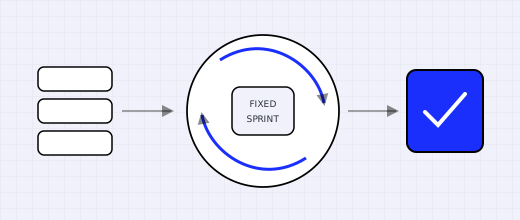
Scrum
A lightweight agile framework for running product development in fixed-length sprints with defined roles.
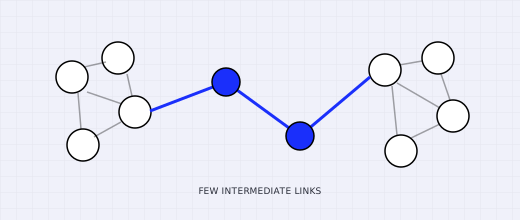
Small World Phenomenon
The finding that most people in a large network are connected through only a small number of intermediate links.
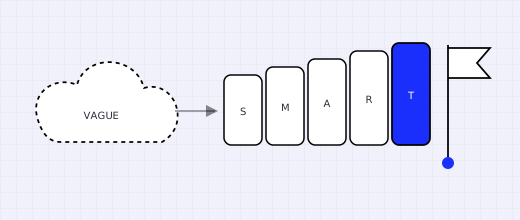
SMART Goals
A checklist for turning a vague goal into one that is Specific, Measurable, Achievable, Relevant, and Time-bound.
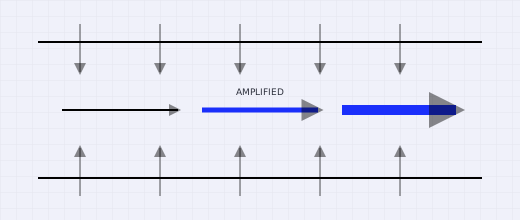
Stress Influence
A Munger tendency. Stress amplifies other psychological tendencies and can trigger sudden, drastic shifts in behavior.
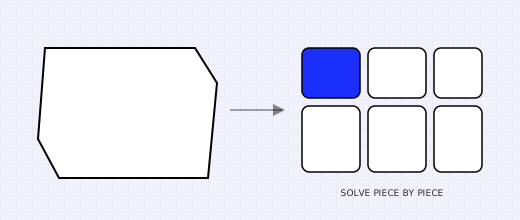
Subdividing
Breaking a large, complex problem into smaller parts that are each easier to understand and solve.
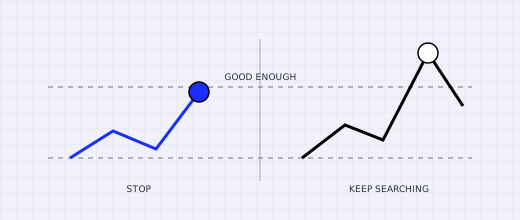
Sufficiency vs Maximization
Two decision styles. Stop at a "good enough" option, or keep searching for the objectively best one.
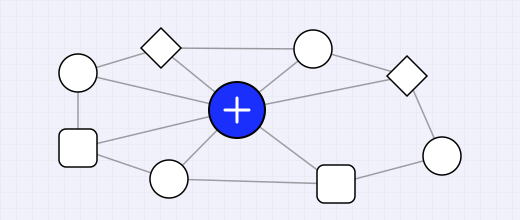
Technium
Kevin Kelly's term for the self-organizing, interconnected system that all of humanity's technology forms together.
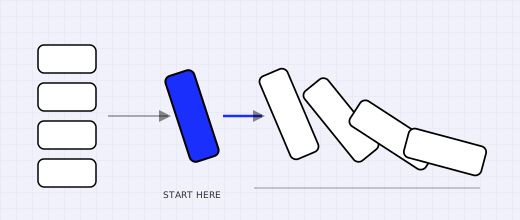
The One Thing
Gary Keller's framework for finding the one action to do first, the action that makes the most other work easier or unnecessary.
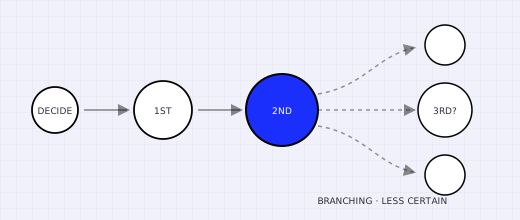
Third Order Effect
Tracing a decision's consequences three steps out, beyond the immediate and second-order effects.

Tipping Point
The point at which small, incremental changes accumulate enough to trigger a sudden, large-scale shift.
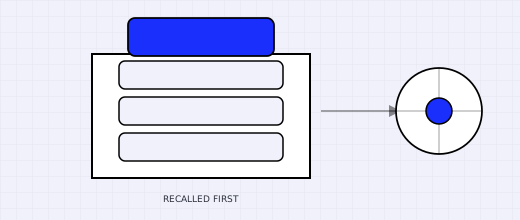
Top of Mind
The idea, brand, or option that comes to a person's attention first, without prompting, when a category is mentioned.
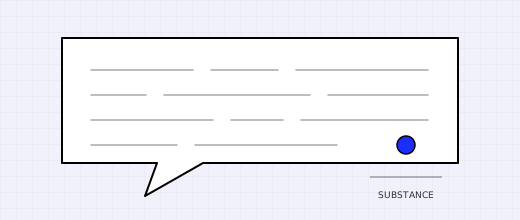
Twaddle
A Munger tendency. People feel pressure to speak or answer at length even when they have little of substance to say.
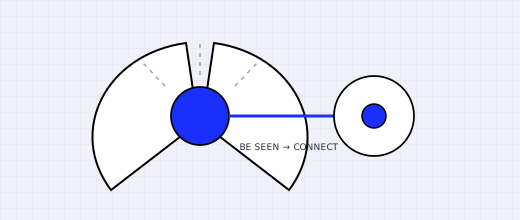
Vulnerability
Choosing to show up and be seen with uncertain outcome, which research links to trust, connection, and courage rather than weakness.
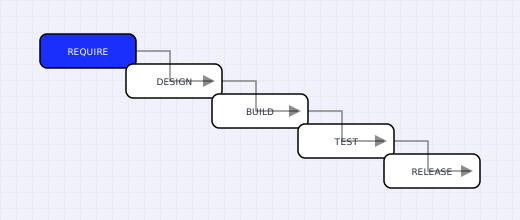
Waterfall
A sequential project approach where each phase (requirements, design, build, test, release) finishes before the next begins.
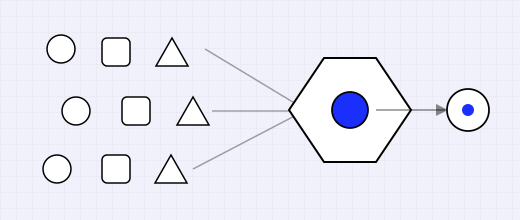
Wisdom of Crowds
Aggregating many independent, diverse judgments can produce an estimate more accurate than most individual experts.
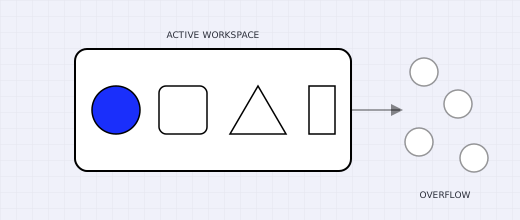
Working Memory
The limited mental workspace that holds and manipulates a small amount of information for immediate use.